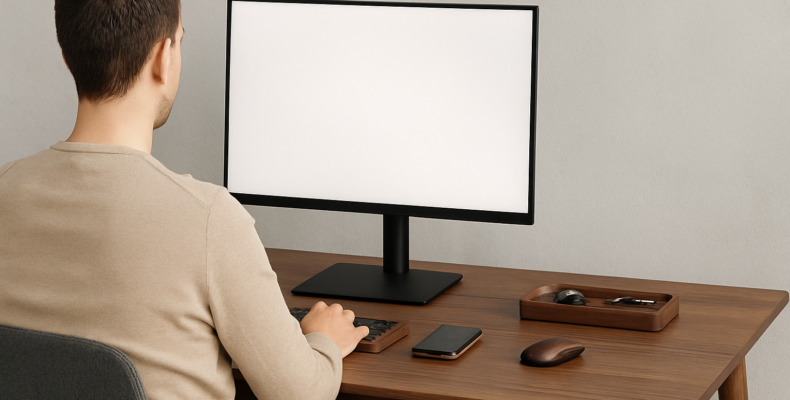
There’s no need for labels, timers, or task-tracking apps when your environment already points you in the right direction. Desk organization doesn’t have to be complex—it just needs to work with your natural rhythm. A space that clears your mind and supports your daily flow begins with clarity in the objects that surround you.
Desk organization built for the way you work
Everyone’s desk looks different. Some are filled with sketchbooks and styluses. Others keep only a laptop and a coaster. Whatever your style, desk organization isn’t about changing how you work—it’s about making room for it. One small wooden tray. A shelf for your monitor. A phone dock that keeps your device upright, not buried beneath paper. The best systems don’t need instruction—they feel right the moment you use them.
Start with the items you use daily
There’s no point in organizing what doesn’t belong. Instead, take stock of the things you reach for most. Pens, chargers, headphones, glasses. That’s your baseline. Once those items have a home, you’ll notice something shift. Your hand moves instinctively. Your desktop breathes. There’s less noise, and more flow.
Desk organization tools that blend form and function
Not all organizers are built equally. Plastic bins, metal mesh, or branded gadgets may serve a purpose—but they often add visual clutter. Natural materials like wood bring balance. A pen tray carved from walnut. A dual laptop dock with soft, rounded edges. These objects bring tactile comfort while offering structure. Good desk organization feels like part of your desk—not an afterthought.
Make your surface work smarter
If your desk only holds items, it’s missing its full potential. Raise your monitor to eye level. Use a shelf to create layers. Stackable trays offer hierarchy without heaviness. Every vertical inch matters when horizontal space is limited. By lifting a few essentials, you open up the space below—without sacrificing accessibility.
Desk organization systems should grow with you
Your needs today won’t be the same tomorrow. One week, it’s a home for sticky notes. The next, it’s a tray for keys and headphones. Choose pieces that adapt—a catchall tray that moves from desk to hallway, or a modular system that you can rearrange with ease. Desk organization isn’t static. It moves with you.
Don’t hide everything—highlight what matters
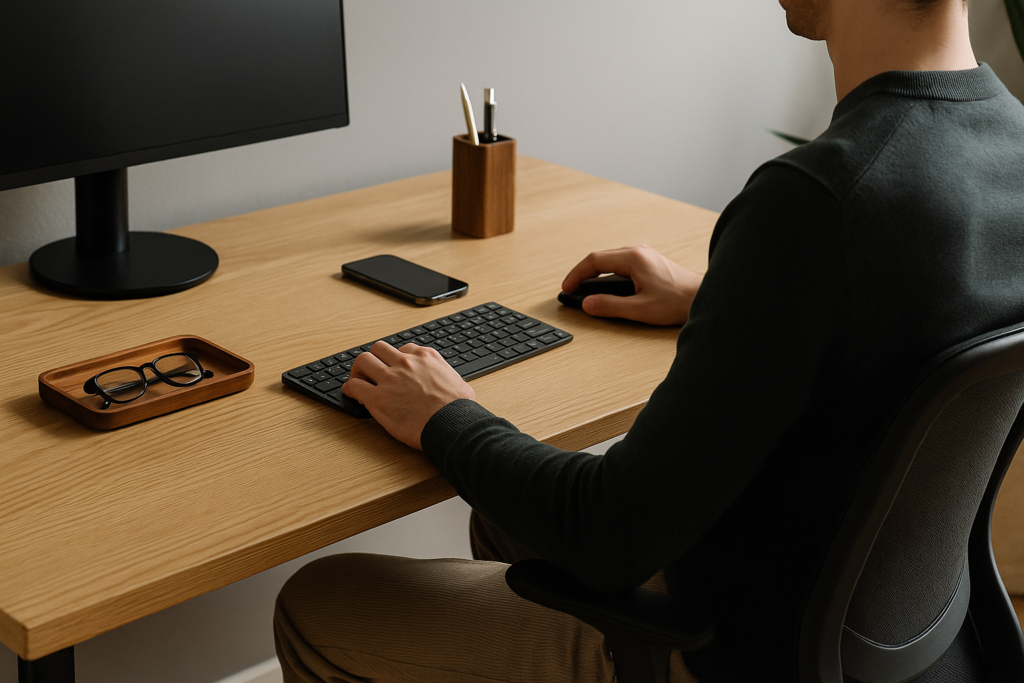
An over-organized desk can feel just as overwhelming as a messy one. If everything’s tucked away, it’s easy to forget what you need. Use open trays for daily essentials, while drawers or shelves can hold what’s used less often. It’s not about minimalism—it’s about visibility. The right objects in the right place, always in view.
Desk organization that improves focus
Clutter steals attention. That’s not an opinion—it’s biology. The brain reacts to visual noise, even if we’re not aware of it. Clean lines, intentional materials, and consistent shapes send a different signal: calm. When your desk feels settled, so do you. Desk organization is not about productivity hacks—it’s about creating space for better thinking.
Let materials do the talking
Wood. Cork. Felt. These textures don’t shout—they invite. Choose accessories that feel good to touch and nice to look at. Let the materials ground you while your mind does the heavy lifting. You don’t need dozens of objects—just a few good ones that bring peace and purpose to your desk.
Desk organization starts with one small shift
You don’t need a full overhaul. Just start. One tray to hold your phone and watch. A pen cup that actually fits what you need. A stand that lifts your laptop off the desk. When these small changes add up, your workspace transforms. And when your workspace changes, so does your workflow.